
By Vincent Wigmans
With more than 200 flight hours per year, full ownership in 2026 is financially and operationally superior to chartering or jet cards.
Essential purchase criteria:
- Due Diligence: A Pre-buy Inspection and a review of the logbooks are strictly necessary for the residual value.
- Maintenance & Operations: Fixed costs for crew, hangarage, and engine programs determine the annual cash flow.
- Tax Status: EU import and VAT payments depend on private use versus commercial AOC operations.
- Silent Market: Approximately 30% of transactions take place off-market via private networks.
Direct contact
sales@faaircraftsales.com | NL: +31 (0)15 820 0999 | BE: +32 (0)3 500 9082
Why this guide is essential for everyone looking to buy a private jet?
Buying a private jet is a strategic decision that goes far beyond luxury or comfort. For entrepreneurs, investors, and high-net-worth individuals, purchasing a private jet is a means to optimize time, increase international mobility, and gain full control over business and private travel. However, buying a private jet is a complex undertaking. It is a capital-intensive, highly regulated, and operationally demanding investment where mistakes can quickly lead to high costs, legal issues, or operational constraints.
What does buying a private jet really mean?
Buying a private jet does not only mean becoming the owner of an aircraft. It means becoming responsible for an operational system consisting of:
- Airworthiness
- Maintenance
- Crew
- Regulations
- Financing
- Insurance
- Operational planning
- Compliance
A private jet is not a passive investment. It is an active business asset that requires continuous attention and management.
A private jet is a strategic tool, not a luxury product.
Although owning a private jet is often associated with luxury, in practice, it is primarily a strategic tool. For entrepreneurs who visit multiple locations per day, manage international teams, or depend on destinations that are difficult to reach, a private jet offers:
- Time savings
- Flexibility
- Privacy
- Safety
- Efficiency
The value of a private jet lies not in the aircraft itself, but in the time it provides you.
What are the benefits of buying a private jet?
With your own aircraft, you determine:
- Your departure time
- Your route
- Your travel duration
- Your comfort level
- Your privacy
- Your crew
You are no longer dependent on commercial airlines, delays, transfers, or limited routes.
What are the downsides: what responsibilities and risks come with a private jet?
Buying a private jet also entails obligations:
- High fixed costs
- Strict regulations
- Technical complexity
- Operational risks
- Tax considerations
A wrong choice can lead to inefficient use, unnecessarily high costs, or loss of value.
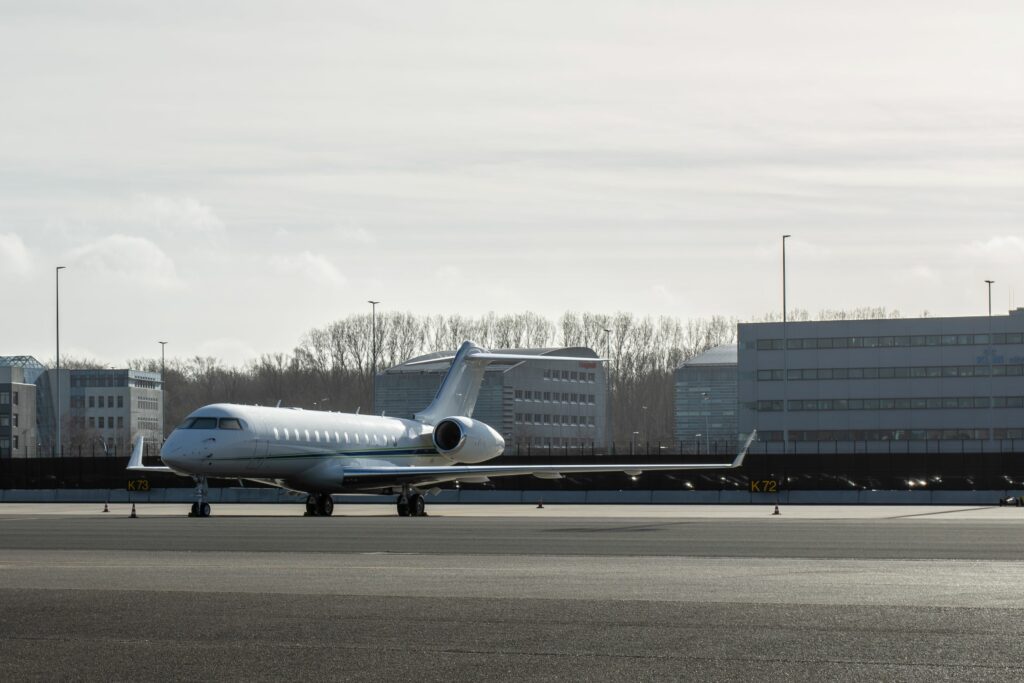
When is buying a private jet interesting?
The most important factor is the number of flight hours per year. This determines whether ownership makes financial and operational sense.
| Flight Hours per Year | Recommended Option | Financial & Operational Rationale |
| < 100 hours | Chartering | The fixed costs of ownership are too high. Chartering offers maximum flexibility without management burdens. |
| 100 – 200 hours | Gray Area / Jet Card | Ownership is possible, but “Fractional Ownership” or a Jet Card is often more efficient. Privacy and specific routes are the deciding factors. |
| > 200 hours | Full Ownership | The costs per hour decrease significantly. Full control over scheduling, interior, and availability becomes profitable. |
Which strategic factors make private jet ownership attractive?
Besides flight hours, other factors play a role:
- Traveling to hard-to-reach destinations
- Last-minute travel
- Traveling with teams or executives
- Privacy-sensitive activities
- Medical or personal reasons
- Need for maximum flexibility
In these cases, a private jet is not a luxury, but a business tool that saves time, money, and stress.
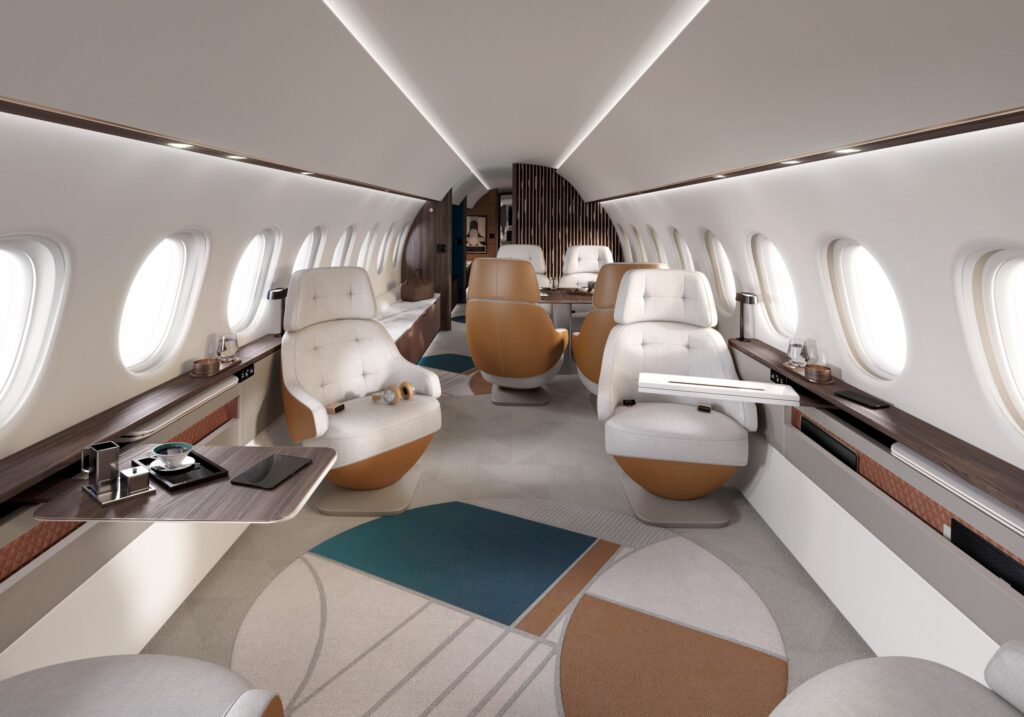
What are the actual costs when purchasing a private jet?
The costs of a private jet are often underestimated. They consist of four layers:
- Acquisition price
- Implementation costs
- Fixed annual costs
- Variable costs per flight hour

Acquisition price
The acquisition price varies greatly per type of aircraft:
| Private Jet Type | Price Range (Pre-owned) |
| Small jets (4–6 people) | €400,000 – €3 million |
| Mid-size jets | €2 – €10 million |
| Super mid-size | €7 – €20 million |
| Long-range jets | €10 – €50+ million |
| Ultra-long-range / VIP airliners | €50 – €100+ million |
The acquisition price is only the beginning.
Some buyers choose older private jets instead of newer models; find out why they do so in our blog: Why do buyers choose older private jets instead of newer models?
Implementation Costs
These are costs that arise during and immediately after the purchase:
- Pre-buy inspection
- Escrow costs (read here how an escrow works and what the risks are: What is an escrow company?)
- Registration
- Import and VAT
- Ferry flight (read here exactly what a ferry flight entails: The ferry flight explained)
- Upgrades or modifications
- Initial maintenance checks
- Insurance
These costs can add up significantly and depend on the type of aircraft.
Fixed annual costs
These costs are independent of usage:
- Crew (salary, training, hotels, per diems)
- Hangarage
- Insurance
- Maintenance programs [How does a engine maintenance program work and what are the advantages?]
- Navigation and communication subscriptions
- Management fees
Variable costs per flight hour
These costs depend on usage:
- Fuel
- Landing fees
- Handling
- Catering
- Maintenance per hour
Which private jet to buy?
The choice of a private jet should be based on your actual usage.
Small jets are ideal for:
- Short flights within Europe
- 2–4 passengers
- Low operational costs
Examples: Cessna Citation Mustang, Embraer Phenom 100.
Mid-size jets are ideal for:
- Examples: Citation XLS+, Hawker 900XP
- Europe, North Africa
- 6–8 passengers
- More comfort and luggage space
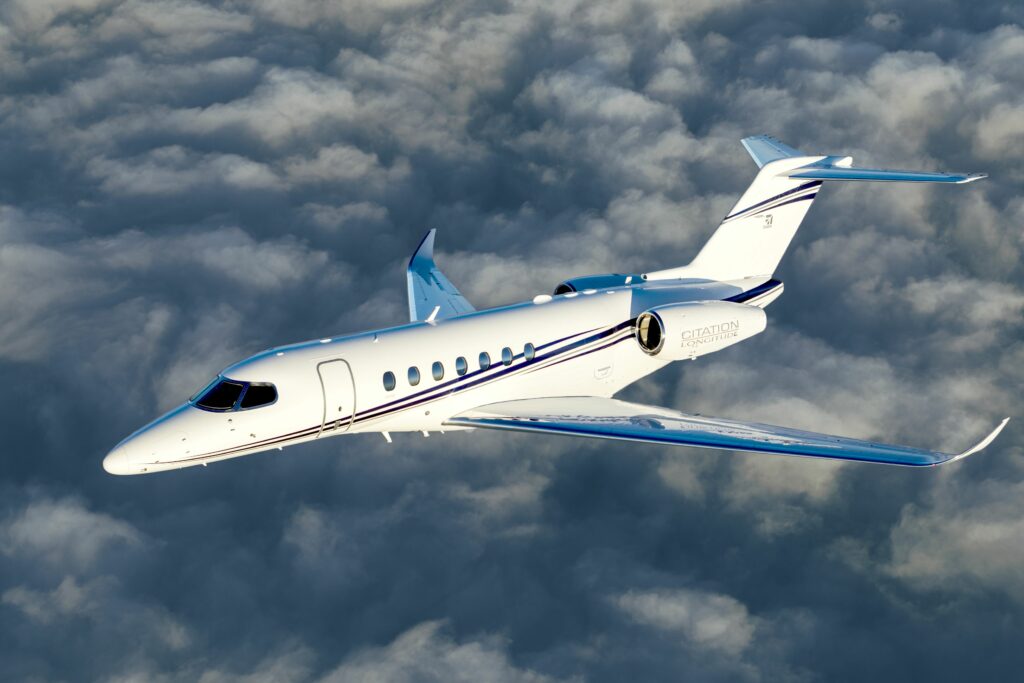
Long-range jets are ideal for:
- Intercontinental flights
- Non-stop to New York or Dubai
- 10–14 passengers
- Examples: Gulfstream G550, Bombardier Global 6000
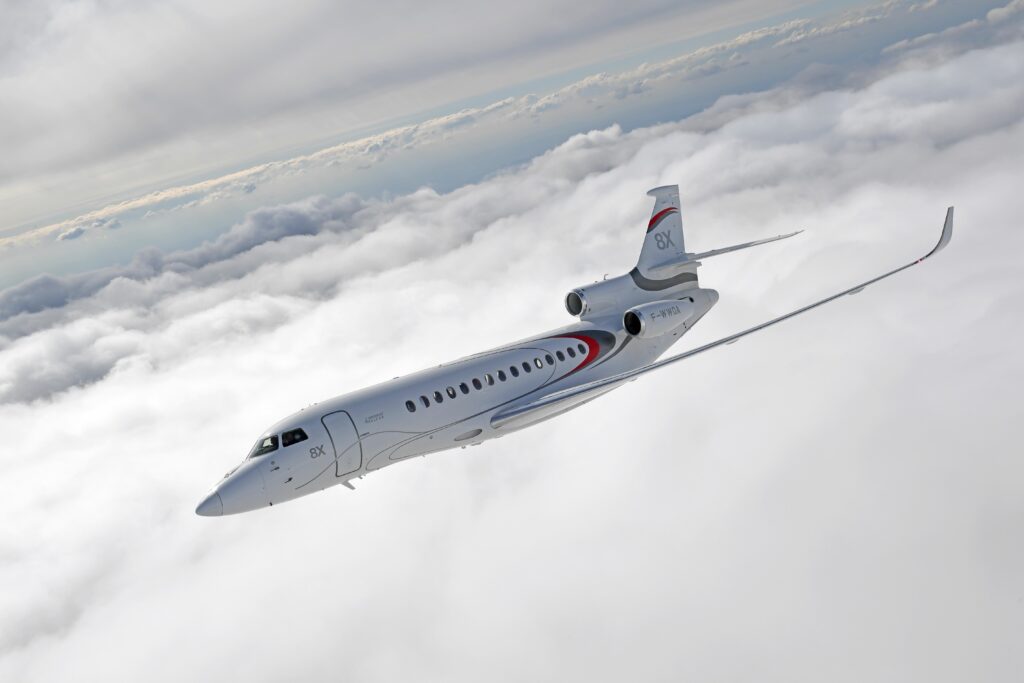
Optimize for 80% of your flights and buy an aircraft that fits the majority of your trips. Handle exceptions through chartering.
Buying a pre-owned private jet
The second-hand market is where most transactions take place.
Advantages:
- Lower purchase price
- Less depreciation
- Faster delivery
- More choice
Risks:
- Incomplete documentation
- Hidden technical issues
- Inaccurate market valuation
A thorough pre-purchase inspection (PPI) is therefore essential. Also, read our blog on how to interpret a purchase inspection: Buying an aircraft: how do I interpret a pre-purchase inspection?
Business deductibility and VAT rules for private jets
If you want to buy a private jet, it is essential to consider the fiscal aspects of the import at an early stage. Importing an aircraft into the European Union is a complex process in which various factors determine the amount of VAT and import duties due. [Read our guide on Aircraft Import within the EU here.]
Factors influencing the import When buying a private jet outside the EU, the tax burden is closely related to:
- The intended use: Will the aircraft be used purely privately or for business purposes?
- The location of import: The member state where the aircraft enters the EU can influence the processing.
- The status of the owner: For EU residents buying a private jet, the basic rule is that the aircraft must be brought into free circulation within the EU, including the payment of VAT.
VAT on aircraft in the EU
It is an important point of consideration that aircraft are, in principle, subject to EU VAT when the owner is an EU resident. This also applies when the aircraft is used for intra-European flights with EU residents on board.
Reclaiming VAT and import duties
When you buy a private jet for business purposes, there are often possibilities to reclaim or offset the VAT and import duties paid. The exact structure, such as the legal entity in which the aircraft is placed, is decisive for the deductibility.
Exemption for commercial operation
Note: the rules for those wishing to buy a private jet for personal use differ significantly from the rules for commercial operators (AOC holders). For commercial aviation, specific exemptions often apply that can make the operation financially more attractive.
Do you want to buy a private jet and ensure that the import and VAT structure runs flawlessly? Contact us to avoid costly mistakes via sales@faaircraftsales.com or call +31 (0)15 820 0999 for expert advice.
The purchasing process
The purchasing process consists of:
- Needs analysis
- Market inventory
- Pre-selection
- Negotiation
- Contract phase
- Escrow
- Technical inspection
- Delivery
- Registration
- Implementation
Off-market aircraft
If you want to buy a private jet, you have undoubtedly already encountered the term “off-market.” In the exclusive world of aviation, a significant portion of transactions takes place outside of public sales channels. But what exactly does it mean to purchase an aircraft off-market, and how do you gain access to this unique inventory? [View our expertise in the field of off-market aircraft transactions here.]
An aircraft is “off-market” when it is not offered on public sales platforms or through public advertisements. The sale takes place entirely behind the scenes. Owners often choose this for:
- Privacy and discretion: Preventing business results or personal movements from being publicly linked to the sale.
- Public perception: Strategic choices within a company.
- Security: Protecting registration numbers and locations.
The search for an off-market aircraft is like looking for a needle in a haystack. Because these aircraft are not listed anywhere online, access to an exclusive network is crucial.
The most efficient way to buy a private jet that is not officially for sale is by partnering with a specialized aircraft broker. A reliable broker possesses a global network and can conduct targeted searches based on your specific requirements and budget.
A proactive broker looks beyond current listings. By directly contacting owners of specific models, opportunities often arise. Many entrepreneurs are open to a sale if the right price is offered, even if their aircraft is not yet officially on the market.
Finding the right off-market private jet requires patience and an in-depth network. When we find that needle in a haystack for a client, it provides the ultimate satisfaction. As one of our buyers wrote:
“I was quite apprehensive as this was not only my first aircraft acquisition, but it was also a jet. FA Aircraft Sales / Vincent Wigmans took me through each and every stage of the acquisition step by step, explaining everything to me so that I was completely comfortable at every point of the acquisition. They found me the exact aircraft that I was looking for to suit my mission, within budget, in a market where availability of aircraft was incredibly scarce.
Through their wide network of contacts, they managed to source my highly sought after CE525 off-market which in itself was an extraordinary feat. From dealing with the escrow company, walking me through the entire pre-purchase inspection with their deep knowledge of aircraft maintenance, through to the final closing of the purchase, they were methodical and professional throughout.
I cannot praise FA Aircraft Sales highly enough, and I would not hesitate to use them again for my next purchase. Their knowledge, network, honesty, professionalism and total “customer satisfaction” orientation made my purchasing experience both delightful and memorable. A great bunch of people who were a pleasure to work with and I highly recommend FA Aircraft Sales to anyone who is thinking of acquiring an aircraft.” Garth M – Owner of D&G Jet Leasing
Are you protected against the most common risks in the aviation market?
The market involves risks such as:
- Fraud
- Misleading advertisements
- Incomplete documentation
- Technical defects
Buying a private jet: Market trends, financing, registration, crew, hangar strategy, value retention, and due diligence
The private jet market 2025–2030: trends, prices, and demand development
The private jet market has experienced unprecedented growth in recent years. The combination of pandemic effects, supply-chain disruptions, geopolitical uncertainty, and a structural increase in business and private mobility has led to a sustained higher demand for private jets. For anyone looking to buy a private jet, insight into these market developments is essential.
Structural demand growth
Since 2020, global demand for private jets has increased by 20–30%. The primary causes include:
- Increased need for flexibility
- Growth of international companies
- Rise of remote teams and multi-location management
- Decreased reliability of commercial aviation
- Increase in high-net-worth individuals (HNWIs)
This trend is expected to continue through 2030.
Limited availability of new aircraft
OEMs (Original Equipment Manufacturers) such as Gulfstream, Bombardier, Dassault, Textron Aviation, and Embraer are currently contending with:
- Long lead times (sometimes 24–48 months)
- Limited production capacity
- Supply-chain delays
- Staff shortages
This makes the pre-owned market more attractive and competitive.
Price development
The prices of pre-owned private jets have increased by 15–40% since 2021, depending on the segment. Although the market stabilized in 2024–2025, prices remain high due to:
- Limited inventory
- High demand
- Strong residual value of popular models
For buyers, this means that acting timely is important.
Financing a private jet: leasing, loan, sale-leaseback, and asset-based lending
Buying a private jet does not have to be done entirely with equity. The financing market for business aircraft is mature and offers several options.
Traditional loan (loan financing)
The most common form of financing.
Characteristics:
- Loan-to-value: Usually 50–80%
- Term: 5–10 years
- Interest: Dependent on creditworthiness and aircraft type
- Collateral: The aircraft serves as security
Advantages:
- Predictable costs
- Ownership remains with the buyer
Disadvantages:
- Higher monthly payments
- Stricter documentation requirements
Operating lease
With an operating lease, the leasing company remains the owner.
Advantages:
- Lower monthly payments
- No residual value risk
- Flexible contract end options
Disadvantages:
- No ownership
- Usage restrictions
Financial lease
A hybrid form between a loan and an operating lease.
Advantages:
- Economic ownership
- Lower initial investment
Sale‑leaseback
You buy an aircraft, sell it immediately to a financier, and lease it back.
Advantages:
- Unlocking liquidity
- Tax optimization
Asset‑based lending
The aircraft is used as collateral for a business loan.
Advantages:
- Fast approval
- Flexible
Registration Choice: PH Registration vs. Foreign Registrations
The registration of a private jet determines:
- Regulatory requirements
- Tax treatment
- Operational flexibility
- Insurance conditions
- Value retention
PH registration (The Netherlands)
Advantages:
- High reputation
- Strong EASA compliance
- Attractive to business users
Disadvantages:
- Higher maintenance and certification costs
- Strict regulations
Malta (9H registration)
Malta is one of the most popular registrations in Europe.
Advantages:
- Favorable tax structures
- Strong aviation authority
- Suitable for both private and commercial use
- Attractive for AOC operations
Isle of Man (M registration)
Advantages:
- Very high reputation
- Fast registration
- Attractive for high-end jets
Disadvantages:
- Not suitable for commercial flights within the EU
Crew management: costs, contracts, training, and compliance
A private jet cannot operate without a professional crew. Crew management is one of the most underestimated aspects of private jet ownership.
Crew costs
A typical crew consists of:
- 1–2 pilots
- Optional: flight attendant
Costs:
- Pilots: €90,000 – €180,000 per year per pilot
- Flight attendant: €50,000 – €90,000 per year
- Training: €20,000 – €40,000 per year per pilot
Contract types
- Full-time crew
- Freelance crew
- Crew via management company
Compliance Pilots must comply with:
- Type ratings
- Recurrent training
- Medical examinations
- Flight time limitations (FTL)

Hangar strategy: location, costs, availability, and risks
Hangar capacity is one of the greatest challenges in the Netherlands and Europe.
Scarcity in the Netherlands: airports such as Rotterdam The Hague Airport, Schiphol Airport, and Lelystad Airport have limited hangar capacity.
Costs
Hangar prices vary:
- Small jets: €2,000 – €5,000 per month
- Mid-size jets: €4,000 – €8,000 per month
- Long-range jets: €8,000 – €25,000+ per month

Value retention and exit strategy
A private jet is a depreciating asset, but value loss can be limited.
Factors affecting value retention
- Maintenance programs (such as TAP Elite, Honeywell MSP, Rolls-Royce CorporateCare)
- Aircraft age
- Engine status
- Avionics upgrades
- Market trends
- Documentation quality
Exit strategy
A good exit strategy includes:
- Timely upgrades
- Complete documentation
- Sales via network (off-market)
Due diligence in aircraft transactions
Due diligence is crucial to mitigate risks.
Technische due diligence
- Full pre-buy inspection
- Engine status and borescope inspection
- Airframe inspections
- Avionics
- Corrosion control
- Logbooks
Legal due diligence
- Title search / Ownership verification
- Liens and mortgages
- Export documentation
- Certificates of Airworthiness
Financial due diligence
- Market valuation [Discover here why an accurate aircraft valuation is essential before purchase.]
- Maintenance reserves
- Future costs
Regulations: EASA and Part-NCC
Regulations determine how an aircraft may be used.
EASA (Europe)
Regulates:
- Airworthiness
- Maintenance
- Operations
EASA Part‑NCC
Applicable to non-commercial operations with complex aircraft.
Sustainability is becoming increasingly important.
SAF (Sustainable Aviation Fuel)
SAF can reduce emissions.
CO₂ compensation
Many operators offer compensation programs.
New technologies
- Electric aircraft (regional)
- Aerodynamic optimization
Buying a private jet vs. charter vs. jet card vs. fractional ownership
For many entrepreneurs and high-net-worth individuals, the question is not only which private jet to buy, but also whether buying is the right choice at all. Alternatives, such as chartering, jet cards, and fractional ownership, can be more efficient or cost-effective in certain situations.
In this chapter, we compare all options based on cost, flexibility, availability, privacy, and operational control.
Chartering a private jet
Chartering is renting an aircraft per flight.
Best choice for:
- Fewer than 100 flight hours per year
- Occasional business trips
- Travelers seeking flexibility without ownership
Advantages:
- No fixed costs
- No maintenance
- No crew
- No regulations
Disadvantages:
- Limited availability
- Higher hourly costs
- No guarantee of aircraft type
- Less privacy than ownership
Cost indication:
€2,000 – €12,000 per hour, depending on type
Jet cards
A jet card is a pre-purchased package of flight hours.
Best choice for:
- 25–75 hours per year for users who want predictable costs
Advantages:
- Guaranteed availability
- Fixed hourly rate
- No ownership costs
Disadvantages:
- Limited flexibility
- Often surcharges for peak periods
- No ownership
Fractional ownership
Fractional ownership means purchasing a share of an aircraft (e.g., 1/8 or 1/16).
Best choice for:
- Users who want ownership without full responsibility
- 50–200 hours per year
Advantages:
- Lower entry costs
- Professional operation
- Predictable costs
Disadvantages:
- Limited availability
- Shared ownership
- No full control
For anyone flying 200+ hours per year, buying a private jet is almost always the most logical and strategic choice.
Private Jet Purchase Checklist
This checklist is designed to help buyers navigate a structured, safe, and efficient acquisition process.
Preparation
- Determine your annual flight hours
- Analyze your typical routes
- Determine the number of passengers
- Define your comfort level
- Set your budget (acquisition + annual operating costs)
- Choose between new or pre-owned
- Decide whether you will fly yourself or hire a crew
- Consider tax structures
- Determine if you want to operate commercially
Aircraft Selection
- Choose the right segment (small, mid-size, long-range)
- Analyze runway requirements
- Verify baggage capacity
- Compare maintenance programs
- Check avionics upgrades
- Analyze fuel consumption
- Compare market purchase prices and hourly operating costs
Market Analysis
- Research off-market options
- Monitor supply and demand
- Analyze value trends
- Compare aircraft globally
Technical Due Diligence
Perform a comprehensive Pre-Purchase Inspection (PPI), including:
- Engine status check (borescope inspection)
- Airframe inspection
- Avionics check
- Corrosion inspection
- Logbook review
- Maintenance history audit (Be sure to read our blog: The Importance of a Full Aircraft Maintenance History in the Sale and Purchase of Aircraft!)
- AD & SB verification (Airworthiness Directives / Service Bulletins)
Legal Due Diligence
- Verify ownership
- Check for liens and encumbrances (mortgage rights)
- Verify export documentation
- Check Airworthiness Certificates
- Review registration history
Financial Due Diligence
- Obtain a professional appraisal (FA Aircraft Sales can assist with this. Be sure to read our blog: The Importance of an Aircraft Valuation Before Purchasing an Aircraft)
- Analyze future maintenance costs
- Verify market value
- Compare financing options
Transaction Process
- Negotiate the price
- Select an escrow company
- Draft a Letter of Intent (LOI)
- Conduct a full Pre-Purchase Inspection (PPI)
- Draft an Aircraft Purchase Agreement (APA)
- Schedule the delivery
- Arrange insurance
- Arrange registration
Implementation
- Arrange crew
- Arrange hangarage
- Arrange management
- Arrange maintenance contracts
- Arrange training
- Arrange operational planning
Exploitation
- Determine if you want to operate commercially
- Choose an AOC (Air Operator Certificate) partner
- Analyze charter potential
- Monitor costs and revenues
Exit Strategy
- Monitor market trends
- Plan upgrades in a timely manner
- Keep documentation complete and organized
- Consider off-market sales
Conclusion: Buying a Private Jet as a Strategic Investment
Buying a private jet is a strategic decision that goes far beyond luxury or comfort. It is an investment in time, efficiency, flexibility, and business agility. For entrepreneurs operating internationally, visiting multiple locations, or relying on last-minute mobility, a private jet can have a direct impact on business results.
However, purchasing a private jet is not a simple transaction. It is a complex process that requires technical, legal, fiscal, and operational expertise. The right guidance can make the difference between a successful investment and a costly mistake.
This guide has provided you with an overview of everything involved in buying a private jet. With this knowledge, you are better prepared than 99% of all buyers.
Are you looking to buy a private jet?
If you are considering purchasing a private jet, professional guidance is essential. We assist you with:
- Creating your perfect user profile
- Market analysis
- Aircraft selection
- Off-market access
- Technical inspections
- Valuation
- Contract negotiations
- Escrow guidance
- Registration
- Implementation
Note: This concludes the structured overview of the private jet acquisition process. Having a dedicated partner ensures that every technical and legal detail is covered, protecting your investment from start to finish.
Do you need assistance with purchasing a private jet? We can support you in every aspect of the process. We have two offices in the Netherlands and Belgium:
FA Aircraft Sales – Belgium Office
Address: Luchthavenlei PB 2, 2100, Antwerp, Belgium
Tel: +32 (0)3 500 9082
Email: sales@faaircraftsales.com
FA Aircraft Sales – Netherlands Office
Address: Hoefsmidstraat 41, 3194 AA Hoogvliet Rotterdam, The Netherlands
Tel: +31 (0)15 820 0999
Email: sales@faaircraftsales.com
Veelgestelde vragen
In aviation, the documentation is worth as much as the aircraft itself. If logbooks are missing or there are gaps in the maintenance history, the market value can drop by 20% to 50%.
Without a conclusive history, airworthiness cannot be indisputably proven, making re-certification extremely expensive. [Read more about the crucial importance of a full maintenance history.] Our advice: never purchase an aircraft with gaps in the documentation without a substantial price reduction.
We always work with an independent Escrow agent. Your deposit (typically 5–10%) is held in a blocked account and is only released to the seller once all documents have been signed and the registration has been officially transferred.
If the transaction fails due to technical defects discovered during inspection, the Escrow agent ensures that your funds are safely returned to you.
The asking price is merely a starting point. We determine the true value through the “Adjusted Market Value.” In this process, we adjust the price based on:
-The remaining life of the engines
-The status of maintenance programs
-The completeness of the maintenance history
An aircraft that appears to be favorably priced can end up being significantly more expensive in the long run due to gaps in documentation or upcoming major maintenance requirements.
Yes, this is essential. An inspection is not a vote of no confidence; it is a technical verification. Often, the owner themselves is unaware of hidden corrosion or underlying technical defects.
Without an independent inspection, you inadvertently assume all hidden risks and future costs. In aviation, the rule is: trust, but verify.